How to Spend a Market Morning Without Treating Every Stall as a Stop
A market morning can be more than a shopping errand: learn how to choose a route, ask before handling goods, and leave with useful finds and room to browse.
The common mistake at a market is treating every stall as a required stop. That can turn a useful errand into a crowded circuit, with little time left to choose well or notice how the market actually works. A market morning is easier to shape around one practical aim: buy something, eat there, or learn how the market is organized.
What do you want from a market morning?
Start with the job the visit needs to do. A market can supply breakfast, a particular ingredient, a place to wait out rain, or a quick look at local food and household goods. Picking a lead purpose helps you decide where to begin and what can wait.
- If you need a particular item: Check the market map or ask a vendor where it is sold. If the location is clear, go there first; if not, ask at an information point or choose the nearest relevant section rather than searching every aisle.
- If you want breakfast: Look for seating and a manageable queue before ordering. If there is nowhere to sit and you need a pause, choose a takeaway item; if you want a meal, find a counter with space to stop without blocking customers.
- If you have little time: Pick one section and one small purchase. If the section is easy to reach, browse there; if it is across a crowded market, use the nearest suitable stall or skip the extra detour.
- If you plan to walk afterward: Check whether your intended purchase is easy to carry. If it is bulky or fragile, buy it later or ask whether the vendor can package it for travel; if it is compact, carry it along.
- If you are visiting with someone: Agree on a clear meeting point, such as the main entrance or a named food counter. If the market is easy to navigate, browse separately and regroup there; if it is confusing or crowded, stay together.
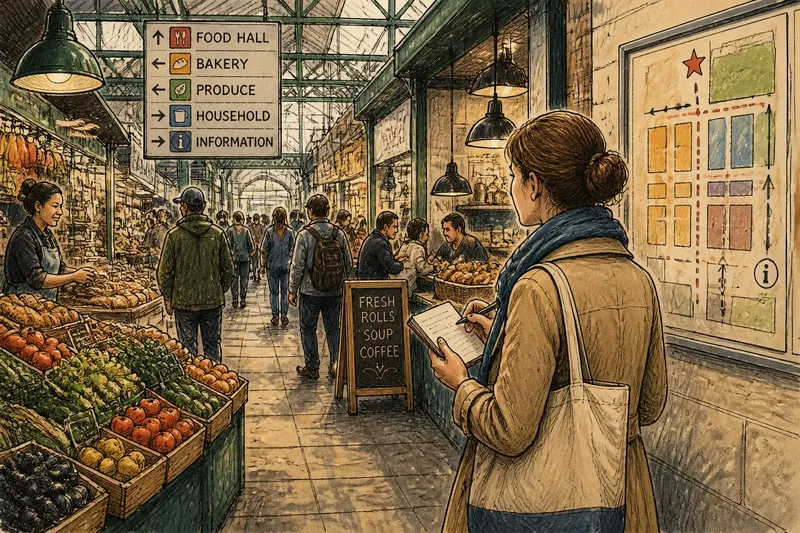
- If you want to understand the market’s layout: Find the entrances, main aisle, and any visible section signs. If the flow is clear, follow it toward the area that interests you; if not, ask a vendor or staff member for a simple direction.
These choices are provisional. A market may be quieter or busier than expected, and a stall may have sold out. Adjust the plan to the scene rather than forcing the scene to obey it.
How can you read a market’s layout?
Begin at an entrance and note the basic structure: rows, islands, indoor rooms, or stalls spread along a street. Look for signs, service counters, seating, and places where people pause. This is less about mapping every corner than about locating the practical features that shape your visit.
Watch the flow before joining it. A wide central aisle may be the main route through a covered market, while side passages lead to quieter counters or household goods. An outdoor market may continue along several streets, with different kinds of stalls in different blocks. If a route is narrow, keep moving and stop only where there is room.
Notice how goods are grouped and how customers approach them. Some vendors select items for customers; at other stalls, customers choose from baskets or shelves. If the arrangement is unclear, ask before touching produce or merchandise. Guessing from appearance is a poor substitute for a short question.
What do queues and pauses tell you?
A queue can point to a popular breakfast counter, a limited service point, or simply a busy moment. Before joining, check what is being served and whether the line is moving. If you want that particular food and have time, wait; if you are only following the crowd, look for another counter or continue browsing.
Pay attention to the spaces between transactions. Vendors may restock, clean a counter, or talk briefly with a neighboring seller. Customers may pause to eat near a doorway or wait for someone beside a bench. These details can help you choose where to stop, but they do not require you to interpret private conversations or photograph people at work.
Say you arrive at an indoor market with a short window before a nearby appointment. The central aisle is crowded, and you want a snack rather than a full meal. You check the signs, follow a side passage to a bakery counter, ask which rolls are ready to eat, then buy one and leave by the entrance marked for the street you need. The result is a direct stop with a clear route onward; the tradeoff is that you have not browsed the rest of the market.
How should you buy, ask, and take photographs?
A small purchase can make a natural pause, but buying is not an admission fee. Choose something you can eat nearby or carry comfortably, such as fruit, bread, or tea. If the item needs careful handling and you have plans afterward, leave it for another visit or ask about packaging.
When you are unsure how a stall works, ask plainly and wait until the vendor is not serving another customer. A brief greeting and a specific question are more useful than handling goods to work out how they are sold. If the answer does not suit your needs, thank the vendor and move on.
Ask before photographing a vendor, customer, or stall where a person is clearly the subject. If the vendor is busy, wait or skip the photograph; if permission is declined, put the camera away. Follow posted rules about photography, sampling, and access, and keep doorways and narrow aisles clear.
Which market questions come up most often?
Is an early arrival always better?
Arrive early if you want more choice or a quieter browse, but a later visit may suit a meal or a livelier market. Check the market’s posted opening hours and choose a time that matches your purpose. A stall that is not open yet is not an invitation to wait in its doorway.
Should you follow the busiest aisle?
Use it to reach the main sections or understand the market’s central route, then step aside where there is room to look. If you need a quieter counter or a specific kind of stall, check a side passage or ask for directions. Do not stop where you interrupt the flow.
What if you do not recognize a product?
Look for a label or ask the vendor what it is and how it is usually used. If it sounds useful and you want to try it, ask about a small quantity; if not, leave it on display and continue. There is no need to turn curiosity into a purchase.
Is it easier to visit alone or with company?
Going alone makes it simple to follow your own route, while company can make a shared meal more enjoyable. If you separate, choose a definite meeting point and a time to regroup; if the market is crowded or poorly signed, stay together. Either way, agree on how to handle purchases before carrying them through the rest of the day.
When is it time to leave?
Leave when you have found the item you came for, finished eating, or reached the end of the section you meant to browse. Check that you have your purchase and know which exit leads toward your next destination. If you have a fragile or chilled item, deal with its storage before adding another stop to the day.
It is not worth the effort to record every stall name, photograph each aisle, or compare every price when you only need breakfast or one ingredient. Keep a note only if it will help you find a particular vendor again. A market can be useful without becoming a filing project.
For a market morning, let the final decision be practical: carry what you bought safely, keep the exit route clear, and leave the rest for another visit if it still interests you. That small bit of restraint makes room for the market to remain a working place, not a scavenger hunt with lunch attached.