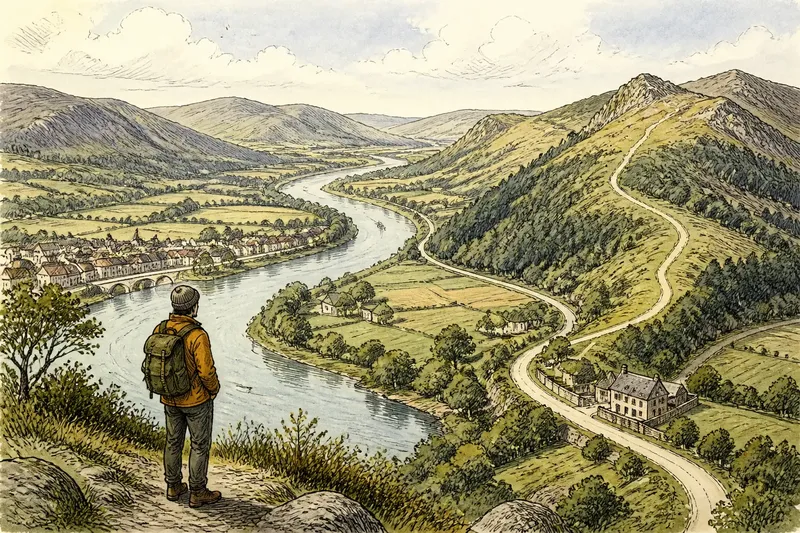
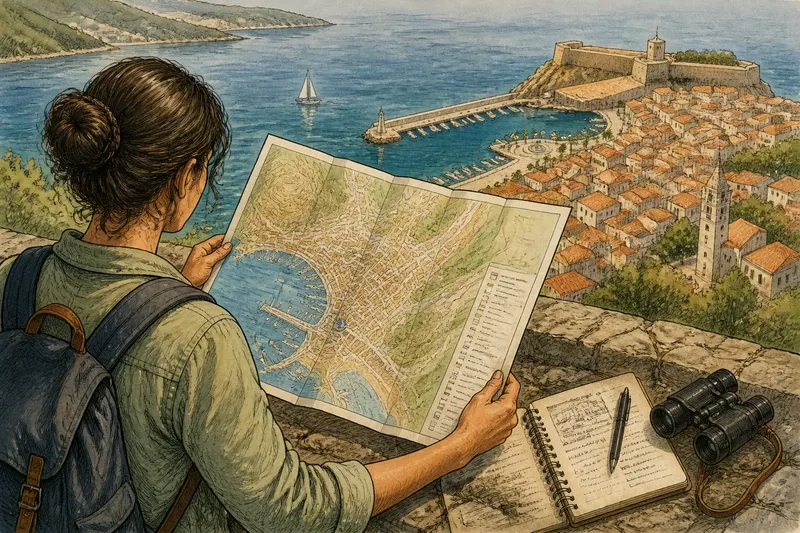
Train or Ferry: Two Ways to Make the Crossing Part of the Trip
Train or ferry: compare pace, views, movement and terminal access to choose a crossing that fits your attention, comfort and plans for the day.
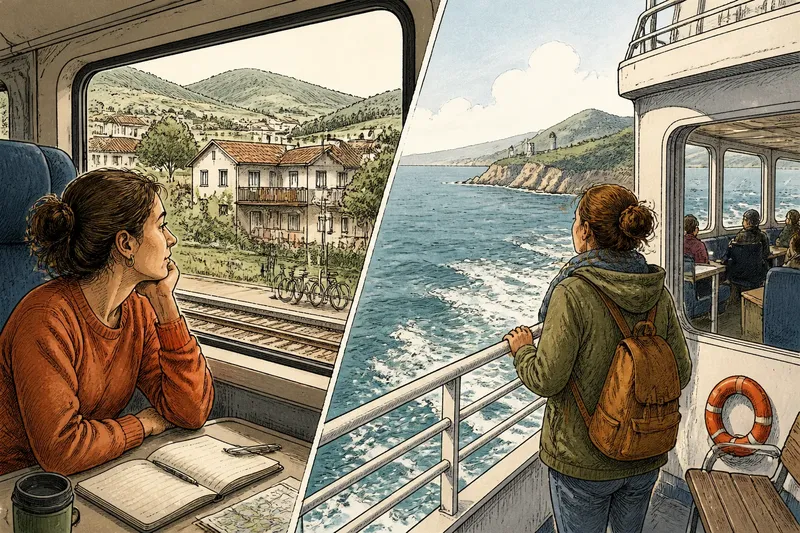
The most common mistake when choosing a train or ferry is comparing only the departure and arrival times. That can leave you with a crossing that looks efficient on paper but feels wrong for the trip: a window seat spent watching tunnels, or an afternoon on deck spent wishing the boat would hurry up. Train or ferry is also a choice about where your attention goes while the landscape passes.
Neither mode is automatically more scenic, relaxing or convenient. The useful question is what you want the hours between terminals to feel like—and whether the route actually offers it.
How do you want the landscape to move?
A train frames the view in quick, changing panels. Fields, platforms, industrial edges, villages and cuttings arrive in succession, sometimes close enough to catch small details: laundry along a balcony, bicycles outside a station, a river behind a warehouse. The window keeps changing the subject.
A ferry gives the eye a larger, slower field. Water may occupy most of the view while a shoreline or island gradually shifts position. An outside deck offers a different vantage point from an interior seat, where windows can make wind and spray less of a concern. The scenery may change slowly, which can feel restful or monotonous.
Choose rail if you enjoy watching inhabited land pass at close range. Choose a ferry if the horizon, the scale of water and the gradual approach to shore are part of the appeal. A train may spend much of its route in a tunnel, and a ferry may spend much of its passage in a harbor; the vehicle alone does not promise a particular view.
Which pace suits your attention?
Rail travel often rewards intermittent attention. You can read, look up for a station, notice a change in the terrain, then return to your book. Announcements and stops may interrupt a quiet stretch, but the route supplies frequent visual prompts.
Ferry time tends to have fewer passing landmarks. You might watch the wake, walk the deck, find an indoor seat or notice the coastline coming into view. That can leave room for a conversation or an afternoon without a tight agenda. It can also make an empty stretch conspicuous if you expect constant novelty.
Ask yourself how you handle a pause with no assigned task. If a slow view feels like breathing room, a ferry may suit you. If you prefer a succession of small changes, a train may hold your attention more naturally. There is no character test hidden in the timetable.
How much room do you want to move?
A train keeps you in a comparatively narrow corridor of seats and aisles. You can usually walk a short distance when the carriage layout and operating rules allow it, but the view remains framed by the windows. A defined seat and a familiar sense of direction can feel reassuring; several hours in one carriage can also become tedious.
Many ferries offer more places to settle or move between, such as a lounge, café, passenger deck or outdoor walkway. The vessel and sailing determine which spaces are open to passengers. More room to roam does not mean every part of the ship is accessible, and wind, rain or spray can make an outdoor vantage point less appealing.
If motion affects you, check the carrier’s guidance and consider asking a qualified health professional for advice suited to your circumstances. For other travelers, a comfortable seat, a quiet corner or a short walk may matter more than the grand view imagined in advance.
Would you rather have a seat or a choice of vantage points?
On a train, the seat is usually the center of the experience. A reserved window seat can make the landscape feel close; an aisle seat makes it easier to reach the carriage facilities. A table can suit a book or meal, though it may put your attention on the tabletop. Check what your ticket includes before planning around a particular seat.
On a ferry, a seat may be one option among several. You could use an indoor lounge as a base and step outside when the view changes, or move between public spaces as the crossing unfolds. The distinction is not comfort versus discomfort. It is whether you want a stable place to return to or several places to choose from.
Say you are traveling between two coastal towns and want to arrive ready for an afternoon walk. In this invented situation, the starting point is a traveler who gets restless sitting still and would rather not stay in wet or windy weather. They choose a ferry, check that the sailing has an indoor passenger lounge and an open deck, then use the lounge as a base and visit the deck when a headland comes into view. The expected result is a change of scene without spending the whole crossing outside; if the vessel lacks those public spaces, the traveler would need to choose another sailing or accept a more limited view.
What kind of place do you want to see along the way?
A train can reveal the edges of towns, small stations and the ordinary spaces between destinations. You see places in the order the tracks present them, whether or not you stop. That makes the route feel like a succession of settings rather than a single scenic event.
A ferry can make the departure and arrival feel more distinct. The shoreline recedes, open water takes over, and land appears again as the vessel approaches port. This can make the shape of a coast, island or harbor easier to read from the water.
Think about what you would like to remember. If you want glimpses of a region’s everyday texture, inspect the rail route and its stops. If you want to see how land meets water, look at the ferry route on a map. Neither view is inherently more revealing; they show different parts of the same geography.
Which practical details should decide the choice?
The timetable is only one part of the experience. Check where each service departs and arrives, how you will reach those terminals, what the ticket allows and whether a seat or cabin needs to be reserved. A port may sit away from the town center, while a station may be close to your next stop—or the reverse. Transfers at either end can shape the day more than the crossing itself.
- Departure location: Check the route from your lodging or previous stop to the station or port. If the connection is simple and leaves enough time to board, keep it; if not, choose a different departure or allow more time.
- Arrival location: Check the onward walk, local transit or arranged pickup. If it connects cleanly to your next plan, keep the service; if not, compare another terminal or add an onward connection.
- Seat or cabin: Check whether a place is assigned, reserved or selected on boarding. If the arrangement suits how you want to travel, book accordingly; if not, look for a service with a more suitable option.
- Onboard spaces: Check which public areas, food services and outdoor decks are available on the specific sailing or train. If the spaces match your plan, proceed; if not, revise the plan or choose another service.
- Connection after arrival: Check what happens if the crossing is delayed or you miss the next departure. If there is a workable alternative, keep the connection; if not, leave more time or choose a later onward service.
- Accessibility and luggage: Check the carrier’s information for the assistance, access and luggage arrangements you need. If they fit your requirements, continue with that service; if not, contact the carrier or compare an alternative.
For tickets, boarding arrangements, accessibility and route-specific restrictions, follow the carrier’s instructions and local rules; these vary by service. It is not worth spending an evening trying to identify the perfect side of the train or the exact moment a ferry will line up with a landmark. A useful view is a bonus, not a contract.
Which questions help you choose train or ferry?
Is a train or ferry better for seeing scenery?
A train usually gives a changing view of land, settlements and the spaces between them. A ferry usually offers a broader view of water and coast, though the route and weather shape what you can see.
Which crossing feels more relaxing?
That depends on whether you prefer a stable seat and frequent visual changes or more room to move and longer stretches of open view. Consider what kind of pause feels pleasant to you rather than assuming one mode is restful for everyone.
Can you get off during a train or ferry crossing?
Stops and disembarking rules depend on the service and ticket. Check the itinerary and carrier information before treating a stop as time for a visit.
How should you compare total travel time?
Include the trip to each terminal, the required arrival time, transfers after arrival and the consequences of missing a connection. A shorter crossing can still take more of the day if its terminals are less convenient.
What should the crossing leave you ready to do?
Before booking, decide whether you want close views of land, a broad view of water, room to move or a settled seat. Then check whether the route, vessel or carriage and terminal locations support that preference. Train or ferry is a choice about how you spend the distance, not a verdict on which journey is better.
For a final check, search the specific train or ferry route and compare its terminal access, onboard spaces and arrival connection—not just the crossing time. Choose the option that leaves you with enough time and energy for what comes next.